HubSpot vs Pipedrive Alternative: An AI-Native CRM Built for Claude and ChatGPT
Compare HubSpot, Pipedrive, and an AI-native CRM built into your AI Assistant's tenant. Honest pricing, MCP access, and governance breakdown.
By Artificial Wit Team
By Artificial Wit Team. Last updated: August 11, 2026.
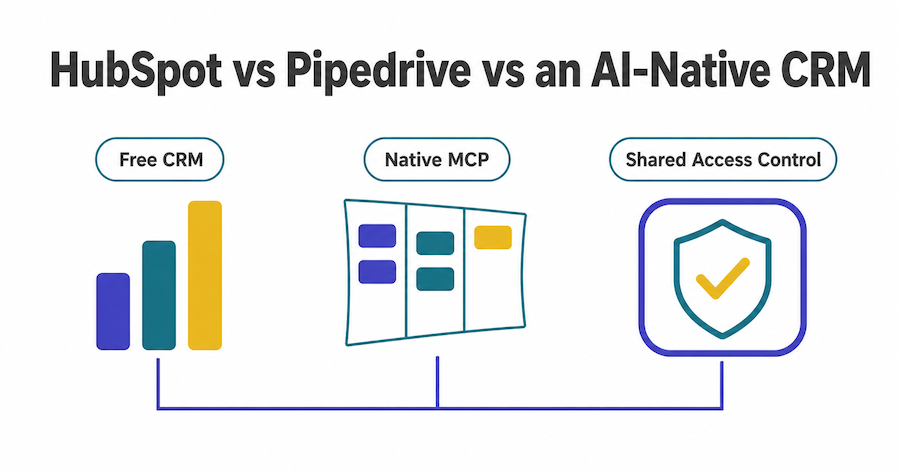
If you're looking for a HubSpot vs Pipedrive alternative built specifically for teams already running Claude or ChatGPT, the real difference in 2026 isn't whether your CRM can talk to an AI model, all three can. It's whether that AI model, your knowledge base, and your CRM live in one governed tenant or three separate logins. HubSpot wins on free-tier generosity. Pipedrive wins on pipeline-first UX and a native MCP server that's genuinely well built. Neither was built to share an Access Control model with the AI assistant your team already runs.
Renata ran sales ops for a 14-person team that had just rolled out Artificial Wit's AI Assistant for support and internal search. When leadership asked her to evaluate CRMs, her first move was the obvious one: check whether the free tools everyone already knew, HubSpot, Pipedrive, could just plug into what they had. Both could connect to Claude. Neither could share a login, a permissions model, or a knowledge base with the AI Assistant already running production traffic.
That's the gap this article closes. You'll get an honest look at what HubSpot and Pipedrive actually offer in 2026, including their real AI and MCP capabilities, not a strawman comparison, then a clear picture of where Artificial Wit's CRM fits for a team that's already standardized on one AI platform.
- Pipedrive ships a native MCP server on every plan, including Lite at $14/seat/month annual, genuinely competitive on AI connectivity, not a laggard.
- HubSpot's free CRM is real but capped: 2 users, 1 pipeline, 10 custom properties, no multi-step automation, HubSpot branding on every asset.
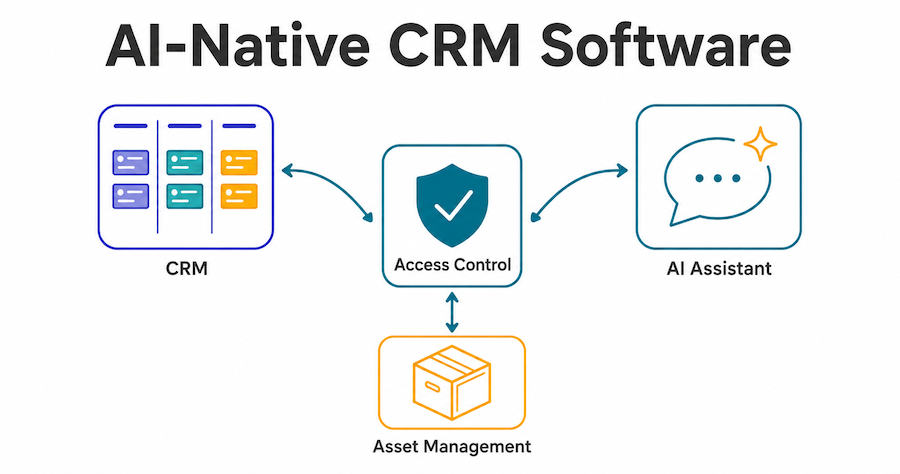
- Artificial Wit's CRM differentiates on shared tenancy: one Access Control model (Public/Restricted, record-level Private/Protected/Public) spans CRM, AI Assistant, and Asset Management, so adding CRM to an existing account is configuration, not a second integration project.
- "Which CRM connects to AI" is the wrong question in 2026, HubSpot, Pipedrive, Zoho, and others all do. "Which CRM shares governance with the AI you already run" is the one worth asking.
- Artificial Wit's CRM starts free (1 workspace, 1 user, 3 API connections), with paid tiers starting at $29/user/month once you need unlimited APIs and a hosted MCP server.
The Real Question Isn't "Can My CRM Talk to Claude" Anymore
A year ago, asking whether a CRM could connect to an AI assistant was a real differentiator. It isn't now. As of 2026, Pipedrive ships a native MCP server available on every plan, and HubSpot, Zoho, and several newer AI-native challengers have their own AI layers or MCP connections too.
Positioning any CRM as "the first one you can talk to with Claude" in 2026 would be false, and easy to disprove with one search. The honest differentiator has moved one level up: not whether the CRM connects to AI, but whether that connection lives inside the same governed system as the rest of your AI stack, or bolts on as a fourth login next to your AI Assistant, your knowledge base, and your Asset Management tool.
Want to see how the shared-tenant model works before we get into the comparison? Read the full breakdown of Artificial Wit's AI-native CRM.
HubSpot: The Generous Free Tier With a Ceiling
HubSpot earns its reputation. The free CRM genuinely includes contact and deal tracking, a website, live chat, and 100 marketing contacts with no time limit and no credit card required. For a solo founder or a two-person team, it's hard to beat as a starting point.
The ceiling shows up fast once a team grows past that. The free plan caps out at 2 users, 1 pipeline, and 10 custom properties, with roughly 1,000 stored contacts on newer accounts. Multi-step automation is paid-only, and every free email, form, and landing page carries HubSpot's own branding, not yours. Paid tiers start at Starter ($20/user/month), jump to Professional ($100/user/month) for real automation and reporting, and top out at Enterprise ($150/user/month).
That pricing curve matters for a team evaluating an AI-native CRM specifically because HubSpot's AI capabilities live in a separate product line layered on top of the core CRM, not a single unified platform with one governance model across sales, support, and internal tools. If your AI assistant is already elsewhere, HubSpot doesn't change that; it adds a fourth system to keep synchronized.
Pipedrive: Native MCP, Pipeline-First, But Still a Separate System
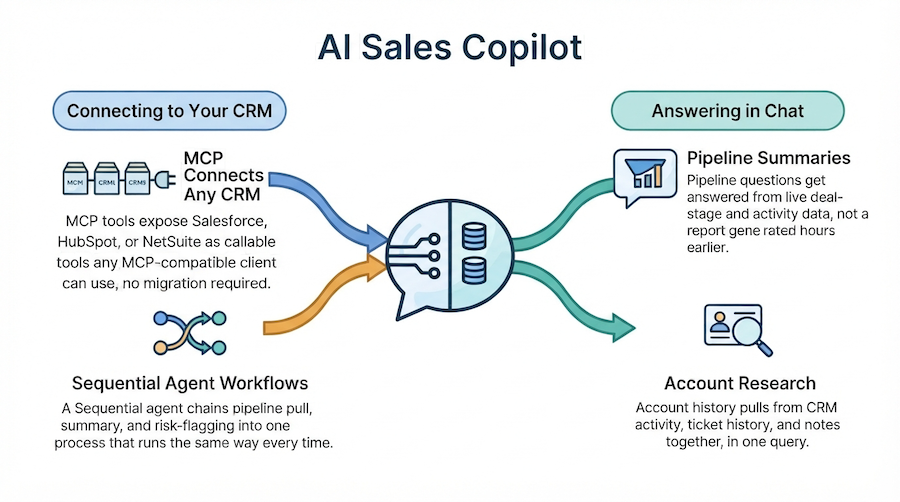
Pipedrive deserves real credit here. Its native MCP server, launched in 2026, is available on every plan tier, from Lite at $14/seat/month (annual) up through Ultimate at $69/seat/month, and connects to Claude, ChatGPT, or any MCP-compatible client through a secure OAuth flow with no developer resources required. Users can search deals, create records, update contacts, and analyze pipelines directly from their AI interface.
Pipedrive's pipeline visualization is also genuinely strong, arguably the clearest drag-and-drop deal board in the category, and AI features (sales assistant, AI-generated reports) are built in starting from the entry-level Lite tier, not gated to the top of the pricing ladder the way some competitors do it.
Here's the gap: Pipedrive's MCP server is a feature announcement, not a platform-wide governance model. It connects Pipedrive's data to your AI client, but it doesn't share an Access Control model, a knowledge base, or a tenant with whatever AI Assistant, ticketing system, or asset tracker your team already runs. Two support reps calling the same MCP tool in Artificial Wit's platform can see different fields based on Restricted-role permissions; Pipedrive's MCP access is governed by Pipedrive's own user roles, a separate system your IT team has to reconcile against everything else.
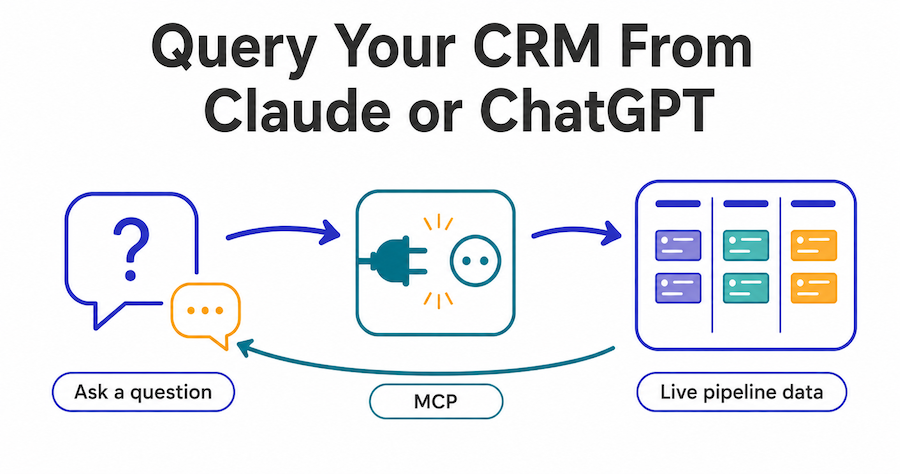
Already running an AI Assistant and wondering what adding a CRM to that same tenant actually looks like? See the full pipeline-querying walkthrough.
Where Artificial Wit's CRM Fits: One Tenant, Not a Bolted-On Bridge
Devon led RevOps at a 40-person company that had rolled out Artificial Wit's AI Assistant six months earlier for internal knowledge search. When the sales team asked for the same "ask a question, get a pipeline answer" experience HubSpot and Pipedrive both market, Devon's team didn't sign up for either. They turned on the CRM module already sitting inside their existing Artificial Wit account.
That's the actual mechanism, not a marketing claim. Artificial Wit's CRM is feature-competitive with HubSpot and Pipedrive on the core mechanics:
- Customizable pipelines and stages with a drag-and-drop deal board
- Automatic stage-probability-driven weighted forecasting
- Lead tracking with source attribution
- Company/contact 360 view
- Multi-currency deal recording
- Record-level access control (Private, Protected, or Public)
What's different is governance: that record-level access control uses the same Access Control model that already governs Knowledge Items, Agents, LLM models, and APIs across the rest of the platform. A rep and a manager calling the same deal record through the AI Assistant can see different fields, without a second permissions system to configure.
Connecting Claude or ChatGPT to query the pipeline works the same way it does for any other Artificial Wit-registered tool: authenticate with an API key for scripted or service use, or connect via OAuth using your own Artificial Wit login for a personal MCP client like Claude Desktop or Cursor, no separate key to generate or store. One endpoint, the same one your AI Assistant, knowledge base, and Asset Management tools already use, not a fourth system with its own auth flow.
Six weeks after Devon's team turned it on, their reps stopped exporting pipeline data into a separate BI tool for weekly forecast reviews. The weighted-forecast number Claude returned matched what was already on the deal board, because it was the same record, not a synced copy.
Ready to add CRM to a tenant you already run? Sign up free, no credit card required, or explore Artificial Wit's CRM product page for the full feature list.
Head-to-Head: Pricing, MCP Access, and Governance
| HubSpot | Pipedrive | Artificial Wit CRM | |
|---|---|---|---|
| Free tier | Yes, 2 users, 1 pipeline, capped contacts | No free tier (14-day trial only) | Yes, 1 workspace, 1 user, 3 API connections |
| Entry paid price | $20/user/month (Starter) | $14/seat/month (Lite, annual) | $29/user/month (Pro) |
| Native MCP / AI client access | Separate AI product line | Native MCP server, all plans | MCP endpoint shared with AI Assistant |
| Auth options for AI client | Varies by product | OAuth | API key or OAuth |
| Shared tenant with AI Assistant/knowledge base | No | No | Yes, same Access Control model |
| Record-level access control | Role-based (paid tiers) | Role-based | Private/Protected/Public, same model platform-wide |
The table above isn't meant to declare a universal winner. It's meant to make the actual tradeoff visible: HubSpot and Pipedrive are both mature, well-built CRMs with real AI connectivity in 2026. Artificial Wit's CRM is competitive on the same mechanics, and its advantage only shows up for one specific buyer, a team that already has an AI Assistant, knowledge base, or Asset Management tool running on the platform.
Which One Should You Actually Choose?
If your team has no existing AI platform and wants the most generous possible free tier to start, HubSpot's free CRM is a genuinely reasonable choice, understanding its 2-user and 1-pipeline ceiling arrives quickly. If pipeline visualization and a mature, dedicated MCP server matter most and you're comfortable running your CRM's AI access as its own governed system, Pipedrive is a strong, defensible pick.
If your team already runs Artificial Wit's AI Assistant, or is evaluating one alongside a CRM decision, the calculation changes. Adding CRM to an existing tenant means no second signup, no second OAuth grant, and no second permissions system to reconcile with the first, the exact friction Renata's team was trying to avoid when this evaluation started.
Frequently Asked Questions
Does HubSpot's free CRM include AI features?
HubSpot's core free CRM plan doesn't include its more advanced AI tools, those live in HubSpot's separate AI-focused product tier and paid plans. The free plan covers contact and deal tracking, a basic website, live chat, and up to 2,000 marketing emails a month.
Can Pipedrive's MCP server connect to Claude and ChatGPT at the same time?
Yes. Pipedrive's native MCP server works with any MCP-compatible AI assistant, including Claude and ChatGPT, through the same secure OAuth connection, so switching or using multiple clients doesn't require reconfiguring anything on Pipedrive's side.
Is Artificial Wit's CRM cheaper than HubSpot or Pipedrive?
It depends on what you're comparing. Artificial Wit's Free plan (1 user, 3 API connections) is more limited than HubSpot's free 2-user plan, but Artificial Wit's Pro tier at $29/user/month sits below HubSpot's Professional tier ($100/user/month) and above Pipedrive's Lite tier ($14/seat/month, annual). The real cost comparison isn't the CRM alone, it's whether you're also paying for a separate AI assistant and knowledge base elsewhere.
Do I need an API key to query Artificial Wit's CRM from Claude?
No. An API key is one option, useful for scripted or service connections, but you can also connect via OAuth using your own Artificial Wit login, with no separate key to generate or store. Most people connecting a personal MCP client like Claude Desktop use OAuth.
Can I switch from HubSpot or Pipedrive to Artificial Wit's CRM without losing my pipeline history?
Artificial Wit's CRM supports standard contact and deal import; the practical migration effort depends on how much custom automation and reporting you've built in your current tool, since those configurations don't transfer automatically between platforms.
Does Artificial Wit's CRM require the AI Assistant to work?
No. The `/crm` product's own FAQ confirms products can be used independently, a team can run the CRM alone. The shared-tenant advantage described in this article only applies once you're also running the AI Assistant, Asset Management, or both.
HubSpot vs. Pipedrive vs. an AI-Native CRM: The Honest Verdict
HubSpot and Pipedrive earned their market positions with real strengths, HubSpot's free-tier generosity and Pipedrive's pipeline-first design with a genuinely well-built native MCP server. Neither was built to share a tenant with a separate AI Assistant your team already runs.
Renata's team chose Artificial Wit's CRM not because HubSpot or Pipedrive lacked AI connectivity, both had it, but because pipeline queries through Claude needed to use the same Access Control model already governing their knowledge base and support agents, not a fourth system to keep in sync.
Sign up free, no credit card required, and see whether your pipeline belongs in the same tenant as the rest of your AI stack.
Related reading
Ready to put this into practice?
Talk to us about your stack