Precoro vs Procurify Alternative: An Asset-Lifecycle-Native Platform for AI Agents
Compare Precoro, Procurify, and an asset-lifecycle-native platform that owns procurement and post-purchase asset management in one tenant.
By Artificial Wit Team
By Artificial Wit Team. Last updated: August 11, 2026.
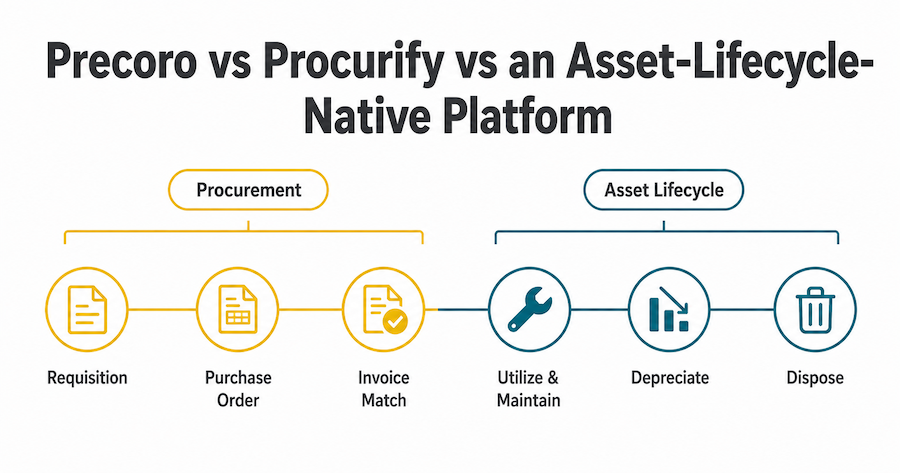
If you're weighing a Precoro vs Procurify alternative, the honest starting point is this: both are genuinely strong procurement tools, and neither one owns what happens to an asset after the purchase order closes. Precoro and Procurify both handle requisition-to-payment well. Neither tracks the maintenance schedule, depreciation curve, or disposal record for the asset that purchase order actually bought.
Carlos ran operations for a 60-person logistics company that had outgrown spreadsheet-based purchasing. He evaluated Precoro first, liked the three-way matching and approval workflows, then hit the same question twice: once his team bought a forklift or a laptop, where did the maintenance schedule and depreciation tracking live? Precoro's answer, like Procurify's, was "somewhere else", a separate asset-tracking tool, a second login, a second export to reconcile.
That's the gap this article closes. You'll get an honest look at what Precoro and Procurify actually offer for procurement in 2026, then a clear picture of where a platform built to own the full procure-to-asset-to-disposal lifecycle fits, especially for a team that wants that data queryable by an AI agent, not just visible in a dashboard.
- Precoro's Core plan starts at $499/month (flat, not per-user) and covers requisitions, purchase orders, approvals, and vendor management; the $999/month Automation tier adds AI-powered AP automation and API access.
- Procurify prices per user ($12-$39/user/month) and is ranked the #1 mid-market procure-to-pay platform by G2, managing over $100B in tracked spend.
- Neither Precoro's nor Procurify's current marketing highlights native MCP or AI-agent connectivity, unlike some CRM platforms that have already shipped this.
- Artificial Wit's Asset Management product covers the full six-stage procure-to-pay cycle plus post-purchase lifecycle (maintenance scheduling, depreciation forecasting, disposal) in one tenant, queryable via MCP with an API key or OAuth using your own login.
- The real differentiator isn't out-featuring Precoro or Procurify on procurement depth alone, it's not needing a second tool once the purchase order closes.
The Real Gap: Procurement Software Stops at Payment
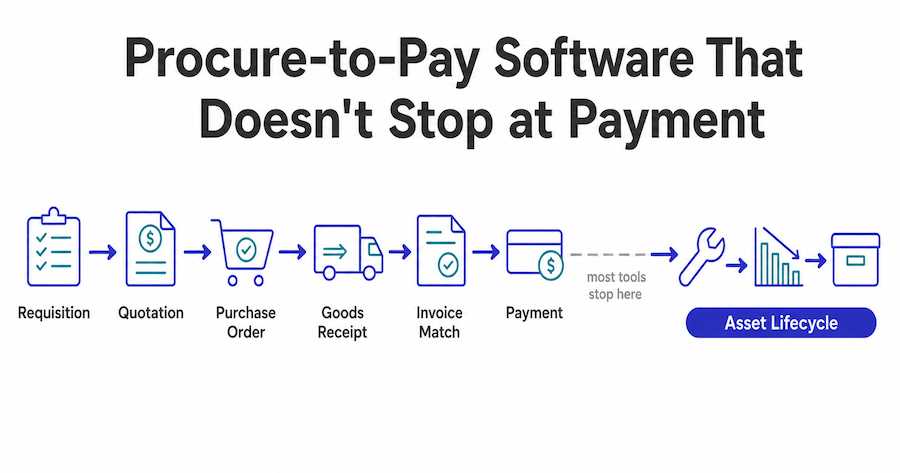
Every procurement platform solves the same core workflow. Precoro, Procurify, Coupa, and SAP Ariba all cover requisition, approval, purchase order, receipt, invoice matching, and payment. That workflow matters. None of these tools do it badly.
The gap opens the moment payment clears. A laptop, a forklift, a software license, whatever that purchase order actually bought, needs a maintenance schedule, a depreciation forecast, and eventually a disposal record. Procurement tools generally don't own that step.
IT and SaaS asset trackers like ServiceNow, Zylo, and Zluri own the lifecycle side instead. But they usually plug into procurement rather than running it themselves. They also skew toward software assets specifically, not general physical equipment like forklifts or office hardware.
That split is the actual problem this comparison is about. Procurement lives in one tool. Lifecycle lives in another, or in a spreadsheet. The question isn't whether Precoro or Procurify are good at what they do, they are, it's whether "what they do" covers the whole life of the thing you bought.
Want the full six-stage procure-to-pay breakdown before the comparison? Read the pillar article on procure-to-pay software.
Precoro: Procurement-First, Straightforward Pricing
Precoro's pricing is refreshingly simple for the category: Core at $499/month (flat, not per-seat) covers purchase requisitions, purchase orders, automated approvals, and vendor management. The Automation tier at $999/month adds AI-powered AP automation, real-time budget tracking, a supplier portal, PunchOut catalogs, RFPs, SSO, and API access. Enterprise pricing is custom and adds unlimited users and ERP integrations.
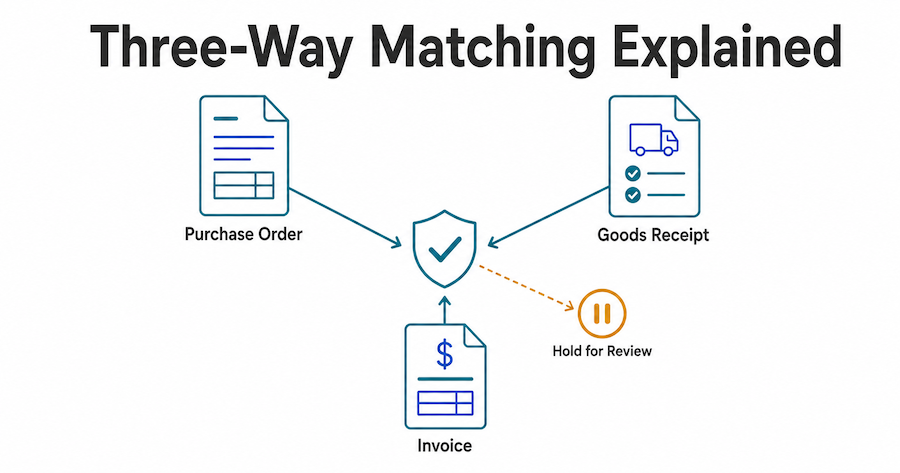
Precoro's core strengths are real: three-way matching between purchase order, goods receipt, and invoice, solid budget tracking, and QuickBooks/ERP sync for finance teams. It's genuinely well suited for small to mid-sized teams automating purchasing for the first time.
What Precoro's public feature list and pricing pages don't mention is any native MCP server or AI-agent connectivity, the kind of feature Pipedrive has already shipped in the CRM space. If a team wants Claude or ChatGPT to answer "which purchase orders are still pending approval," that's not a documented capability today.
Procurify: Mid-Market Intake-to-Pay Leader
Procurify takes a different pricing model: per-user, at Starter ($12/user/month), Business ($24/user/month), and Premium ($39/user/month), with custom Global Enterprise pricing above that. For a mid-sized team, total cost typically lands well into five figures annually once enough seats are added, worth budgeting against Precoro's flat-rate model rather than assuming per-user pricing is automatically cheaper.
Procurify earns its "#1 mid-market procure-to-pay" ranking from G2 honestly. It manages over $100B in tracked spend and covers the full intake-to-pay workflow: purchase requests, customizable approvals by location/department/dollar threshold, invoice-to-PO matching with three-way matching, and spending cards.
Same gap as Precoro: nothing in Procurify's current feature set or pricing pages points to native MCP or AI-agent access. Both platforms are procurement specialists that haven't yet extended into either AI connectivity or post-purchase asset lifecycle.
Already curious what asset lifecycle tracking actually looks like end to end? See how three-way matching and invoice verification work.
Where Artificial Wit Fits: One Platform for the Whole Lifecycle
Naomi managed IT assets for a 90-person company running Precoro for purchasing and a separate spreadsheet for everything after delivery, warranty dates, maintenance schedules, which laptop belonged to which employee. Reconciling the two took a half-day every month.
Artificial Wit's Asset Management product covers both halves in one tenant:
- Procurement (six stages): Requisition → RFQ/Quotation → Purchase Order → Goods Receipt → Invoice three-way matching → Payment
- Post-purchase lifecycle: asset registration and allocation, preventive maintenance scheduling, depreciation forecasting, physical verification audits, documented disposal and retirement, and network discovery for finding software assets nobody registered
- Operational support: a built-in helpdesk with SLA tracking for asset-related requests
Every record, procurement and lifecycle both, sits in the same Access Control model and MCP endpoint as the rest of the platform. Ask Claude which purchase orders are pending, which assets are due for maintenance next month, or when a specific laptop's warranty expires. The answer comes from the same tenant, not a second export.
Connecting an MCP client works the same way as everywhere else on the platform. Use an API key for scripted or automated use. Or connect via OAuth using your own Artificial Wit login for a personal client like Claude Desktop or Cursor, no separate credential to generate or manage.
To be fair about limits: consumable inventory tracking and meter-based maintenance triggers aren't supported yet, and SLA escalation on the helpdesk is manual, not automated. Neither Precoro nor Procurify claims to solve those either, but worth knowing before evaluating.
Three months after switching, Naomi's team eliminated the monthly reconciliation entirely. The laptop's purchase order and its maintenance history are the same record now, not two files that have to agree.
Ready to see the full lifecycle in one place? Sign up free, no credit card required, or explore Artificial Wit's Asset Management product page.
Head-to-Head: Procurement, Lifecycle, and AI Access
| Precoro | Procurify | Artificial Wit Asset Management | |
|---|---|---|---|
| Entry price | $499/month (flat, Core) | $12/user/month (Starter) | Free (1 workspace, 1 user) |
| Pricing model | Flat, tiered by feature | Per-user | Per-user, Pro at $29/user/month |
| Three-way matching | Yes | Yes | Yes |
| Post-purchase maintenance scheduling | Not offered | Not offered | Yes |
| Depreciation forecasting | Not offered | Not offered | Yes |
| Asset disposal/retirement tracking | Not offered | Not offered | Yes |
| Native MCP / AI-agent access | Not documented | Not documented | Yes, API key or OAuth |
| Consumable inventory | N/A | N/A | Not yet supported |
This isn't a "best overall" table. Precoro and Procurify are both mature, credible procurement platforms, one flat-rate and simple to budget, one per-user and deeply featured for mid-market approval workflows. Artificial Wit's advantage is scope: the same tenant covers the purchase and everything that happens to the thing you bought afterward.
Which One Should You Actually Choose?
Start with what's actually broken today. If procurement alone is the problem, requisitions, approvals, and purchase orders taking too long or getting lost, and you're comfortable running asset lifecycle tracking as a separate exercise, Precoro's flat pricing or Procurify's mid-market feature depth are both defensible, well-built choices. Precoro fits a team that wants predictable flat-rate billing regardless of headcount. Procurify fits a team that's already comfortable with per-user SaaS pricing and wants the deeper approval-routing options that come with it.
If the actual pain point is what happens after the purchase order closes, that's a different decision. The maintenance schedule nobody tracks consistently. The depreciation forecast built in a spreadsheet that's always a quarter out of date. The disposal record that only exists in someone's inbox, if it exists at all.
That's the specific gap Artificial Wit's Asset Management product was built to close. It works in the same tenant as your AI Assistant if you're already running one, or as a standalone product if you're not, since the `/asset-management` product's own documentation confirms it doesn't require the AI Assistant to function.
Neither answer is wrong. They're solving different problems, and the honest move is picking based on which problem actually costs your team more time right now.
Frequently Asked Questions
Does Precoro or Procurify track asset maintenance after purchase?
No. Both platforms focus on the procurement workflow, requisition through payment, and neither publicly documents post-purchase features like maintenance scheduling, depreciation forecasting, or disposal tracking.
Can I connect Claude or ChatGPT to Precoro or Procurify's data?
Neither company's current feature pages or pricing documentation mention a native MCP server or AI-agent connectivity, unlike some CRM platforms that have already shipped this capability.
Is Precoro or Procurify cheaper for a small team?
It depends on team size. Precoro's flat $499/month Core plan can be cheaper for larger teams since it doesn't scale per seat; Procurify's $12/user/month Starter plan is cheaper for very small teams but grows with headcount. Compare based on your actual user count, not the sticker price alone.
Does Artificial Wit's Asset Management support consumable inventory?
Not yet. This is an honest limitation, consumable inventory tracking and meter-based maintenance triggers aren't currently supported, worth knowing if that's a core requirement for your team.
Do I need an API key to query asset data from Claude?
No. An API key works for scripted or service connections, but you can also connect via OAuth using your own Artificial Wit login, with no separate key to generate or store.
Can Artificial Wit's Asset Management replace Precoro or Procurify entirely?
For teams whose procurement needs match Artificial Wit's six-stage requisition-to-payment workflow, yes. Teams with more complex approval routing or deeper ERP integration needs than what's documented here should evaluate against their specific requirements directly.
Does Artificial Wit's Asset Management include a helpdesk for asset requests?
Yes. A built-in helpdesk with SLA tracking is part of the product, so requests like "this laptop needs a repair" can be logged and tracked alongside the asset record itself. SLA escalation is currently manual rather than automated, worth knowing if automated escalation is a hard requirement.
Precoro vs Procurify Alternative: The Honest Verdict
Precoro and Procurify both earned their reputations as capable procurement platforms, Precoro's flat pricing and three-way matching, Procurify's mid-market depth and G2 ranking. Neither extends past the payment step into the asset's actual lifecycle, and neither currently offers native AI-agent connectivity.
Carlos's team and Naomi's team both landed on the same conclusion from different starting points: procurement software that stops at payment leaves the more expensive half of asset ownership, maintenance, depreciation, disposal, to a spreadsheet. That's the gap a lifecycle-native platform closes.
Sign up free, no credit card required, and see whether your procurement and asset lifecycle belong in the same platform.
Related reading
Ready to put this into practice?
Talk to us about your stack